Schenker Watermaker Tech Class 1
Schenker Tech Class is a series of articles and videos by “Cruise RO Rich”:
This series is intended to help Schenker watermaker owners better understand how their watermakers work and to review best practices for maintaining, servicing and troubleshooting their watermaker.
If you have a topic you would like to see covered, just email your request to Rich@CruiserServices.com
Subscribe to the class – every time a new class is posted you will be notified.
SCHENKER WATERMAKER TECH CLASS 1 (SERIES):
(Pressure adjustment when running your watermaker for: Sea Water, Fresh Water and Brackish Water.)
The differences between a Piston Pump watermaker and an Energy Recovery Pump watermaker come into highlight when you start talking about running your watermaker on the three possible source water streams: Sea Water, Brackish Water and Fresh Water. A Piston Pump uses a fixed back pressure valve to make the 800psi without feedback and needs to have it’s pressure manually readjusted, not just at the start and stop of each run, but also when changing water streams.
By contrast, the Energy Recovery pump self-adjusts the system pressure to achieve a set product water recovery rate (usually 10%). This means that for every 10 Gallons of water that flows through the watermaker, 1 gallon (or 10%) becomes fresh drinking water and the other 9 gallons (90%) goes overboard as brine. This self-adjusting is done via the volumetric rations of the product and brine reject streams by the Energy Recovery Pump. When you are running on pure sea water, the system self-adjusts to around 800psi to reach the set 10% recovery rate. Then when you are running on pure fresh water the pressure self-adjusts down to around 250psi to hit the 10%. Rather than setting a fixed pressure like a piston pump watermaker, the energy recovery pump sets a fixed recovery rate by the volume design of the pump cylinders and the pressure is self-adjusted up or down automatically to hit the set recovery rate. So you can be motoring through different salinity inlet water streams without worrying about damaging your RO Membrane due to “over-flowing” since the pressure will self-adjust.
This design characteristic means that energy recovery pump watermakers don’t have their production rates increase or decrease based on sea water properties like salinity and temperature. Additionally knowing this comes in handy when troubleshooting an energy recovery watermaker because by measuring the two flow rates (Product Water and Brine Water) you can check the performance of the Feed Pump and Energy Recovery Pump. When someone calls me with a problem, one of the first questions I always ask is, “what is your Product and Brine Water Flow Rates”. By adding these two flow rates together I know the Total Feed Pump Flow Rate and can calculate the Recovery Rate. For example, if you have a 30LPH watermaker (like the ZEN30) and you know it has a 10% recovery rate, then a properly working Feed Pump should be putting out a total of 300LPH with 270LPH of brine reject.
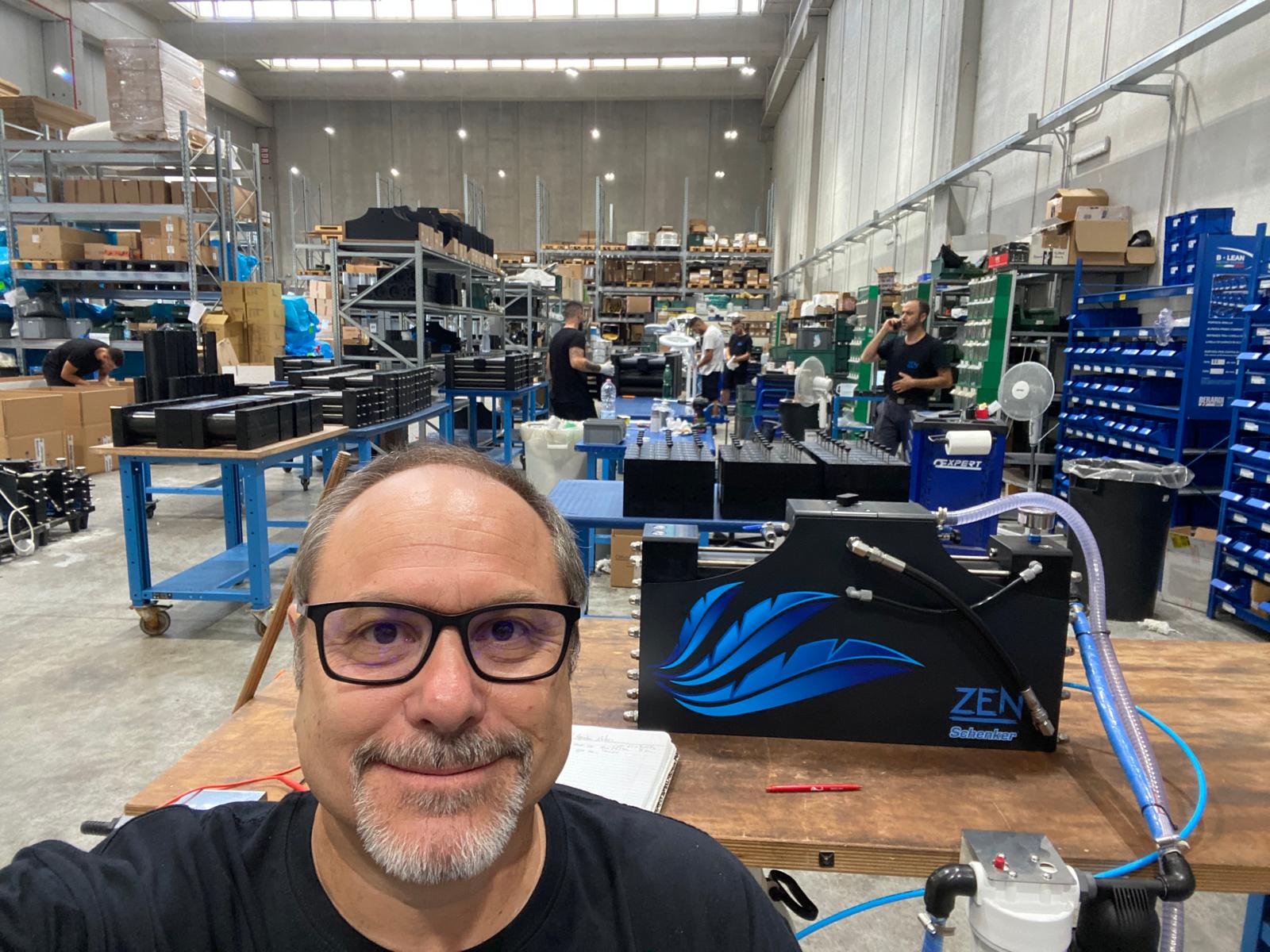 Cheers Rich Boren aka “Cruise RO Rich” Rich@CruiserServices.com
All Rights Reserved Cruiser Services 2025
