Schenker Watermaker Tech Class 3
Schenker Tech Class is a series of articles and videos by “Cruise RO Rich”:
This series is intended to help Schenker watermaker owners better understand how their watermakers work and to review best practices for maintaining, servicing and troubleshooting their watermaker.
If you have a topic you would like to see covered, just email your request to Rich@CruiserServices.com
Subscribe to the class – every time a new class is posted you will be notified.
SCHENKER WATERMAKER TECH CLASS 3 (SERIES):
Under Pressure Alarm Troubleshooting
(As indicated by 3-Rapid Panel LED Lights Flashing)
The Schenker watermakers are equipped with a pressure transducer on the outlet of the feed pump. This transducer monitors the system pressure for both Low and High Pressure. When it senses low pressure, the feed pump is cut off and the remote panel indicates an “Under Pressure Alarm” by 3-Rapid flashes of the Basic Panel button LEDs. Here are some of the most common causes for this Alarm, along with the basic troubleshooting steps to identify and fix the Alarm.
Failed Pressure Transducer?
If you are unable to clear the air from the system and are continually seeing the Under Pressure Alarm, it is unlikely that you have a failed pressure transducer. When the pressure transducers fail, they normally exhibit a “Over Pressure Alarm” (4-Rapid Flashes on the Basic Panel) vs an “Under Pressure Alarm (3-Rapid Flashes). Under Pressure Alarms are usually associated with Feed Pump or Air Bubbles issues.
Air in the System:
Remaining air in the system or air bubbles being sucked into the suction side of the feed pump are the most common cause of the Under Pressure Alarm. This can happen after the raw water strainer is opened for cleaning or if one of the inlet-side hose clamps is loose and allowing air to enter when the inlet side plumbing is under a vacuum. It can also happen after a prefilter change until the air is pushed out of the system. To clear the Alarm, press the “on/off” button and the system can be restarted. Sometimes, especially during initial commissioning or after the boat has been stored on the hard and the inlet side water lines drain, it can take 3 to 4 on/off cycles to purge the air out of the system.
Detached Hose:
If one of the sea water lines upstream of the watermaker group comes detached, the system won’t be able to build pressure, and the pressure transducer will turn off via an Under Pressure Alarm. This feature came in very handy one day when I had a low-quality hose burst while running a unit on my test bench. When the system sensed a rapid decrease in pressure below the minimum threshold, the feed pump shut off, rather than continuing to spray sea water all over my work bench.
Failed Feed Pump Diaphragm:
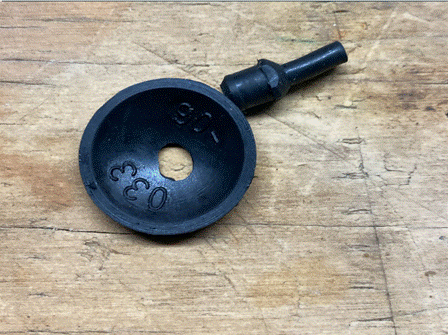
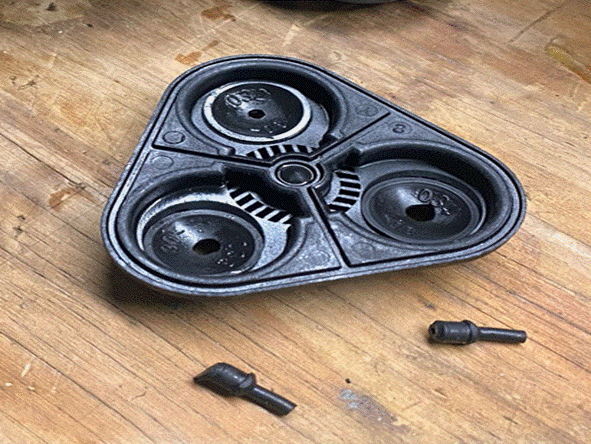
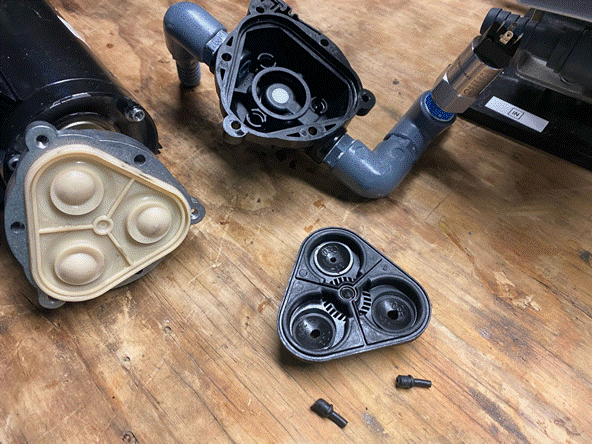
If the easy things have been checked, it could be that the system is unable to build pressure and will continue with a Under Pressure Alarm because there is a feed pump issue. A quick test to see if your feed pump can build pressure is known as a “Kink Test”. If you gently and SLOWLY kink the brine discharge hose with the feed pump running, while watching the system pressure gauge, you should be able to see the pressure start to rise. A healthy feed pump should be able to create 9-10-11Bar on the gauge, so as you slowly kink the brine discharge hose, you should see the pressure increase. If not, then it could be time to open up the feed pump head and verify that something isn’t inside the feed pump diaphragms or to make sure that the diaphragms themselves are not damaged. This holds true for Schenker watermakers that utilize the Procon vane pump as well as the diaphragm pumps. Now, a word of caution here: If you kink the hose too quickly and are not paying attention, you CAN cause the pressure to rise too quickly, and a hose can pop off and spray you and your nearby electrical equipment.
I have attached a photo of a failed feed pump diaphragms. You can see the diaphragm cup guides broken off from the center of the cups, which keeps the pump from being able to build pressure.
Bypassing Pressure Transducer for Testing:
I often find it easier to purge air and troubleshoot Under Pressure Alarms by bypassing the system controls and running the feed pump directly by using the “Bypass Switch” inside the electrical control box. When the feed pump is turned on directly, it bypasses the pressure transducer which can allow you to help prime and troubleshoot the system. Now, you have to be aware of two important issues to keep in mind when running the watermaker with the bypass switch.
First, you have NO Pressure Alarms and Cut-offs. So you have to pay attention and make sure to not over-pressurize the system, which can cause watermaker damage. So this isn’t something you do Willy-Nilly without paying attention to the pressure gauge.
Second, the diaphragm pumps can briefly run dry without damage. However, running the Procon vane pump dry without a positive supply of sea water being pushed into the inlet WILL DAMAGE the pump head. So if your model of watermaker has a Procon vane pump, you can NOT engage the feed pump bypass switch without a positive supply of water being fed into the pump.
Finally Remember Rule No 1 of Watermaker Troubleshooting: Ask before you make it worse!
Whenever I dive into details of watermaker troubleshooting, it’s important to remind everyone that you don’t want to make something worse! Schenker watermakers has top level customer support, so we strongly recommend that you contact a Schenker dealer/technical representative before you start taking things apart and doing troubleshooting tests. A quick discussion and review of your situation can save you time and effort in troubleshooting the problem and make sure new problems and not created in the process.
 Cheers Rich Boren aka “Cruise RO Rich” Rich@CruiserServices.com
All Rights Reserved Cruiser Services 2025
