

Marine Compressors and Cold Plate Systems for Boat Refrigeration Systems | OzeFridge
Killer day-to-day reliability starts with the right marine compressors for your boat’s refrigeration setup. At Cruiser Services LLC, we match efficient compressor-and-cold-plate options to your box size for steady cooling and low draw.
Why OzeFridge Marine Compressors Stand Out
At Cruiser Services, we recommend OzeFridge marine compressors because they’re built for efficient, real-world boat refrigeration. You get three cold plate sizes at one consistent price, plus clear panel readouts in Celsius or Fahrenheit for easy monitoring. Each combo is designed to deliver strong cooling with low daily amp-hour draw, helping your system run reliably without overworking your onboard power supply.
Choosing the Right Marine Compressor for Your Boat Refrigerator
Selecting the right boat refrigerator compressor starts with matching the system to your box size and how you use it onboard. We make that decision simple by guiding you through cold plate sizing and whether a single or dual-plate setup fits your needs.
Balance power expectations by selecting the setup that matches your daily amp-hour goals.
Measure your box capacity (cu/ft) so we can align it to the correct cold plate range.
Choose Cold Plate A, B, or C based on your target volume and expected holdover performance.
Consider freezer needs—some freezer sizes work best with a double cold plate configuration.
Plan your installation layout so the cold plate and compressor combo fits cleanly and vents properly.
Matching Compressor Size to Refrigerator Box Capacity
We size your system around the cubic footage of your refrigerator box, then recommend the cold plate option that aligns with that capacity. Cold Plate A supports smaller boxes, Cold Plate B fits mid-sized boxes and can support certain freezer configurations with a double plate approach, and Cold Plate C is designed for larger volumes with higher daily draw expectations—so your cooling stays consistent without guesswork.
Single Plate vs Dual Plate Marine Compressor Systems
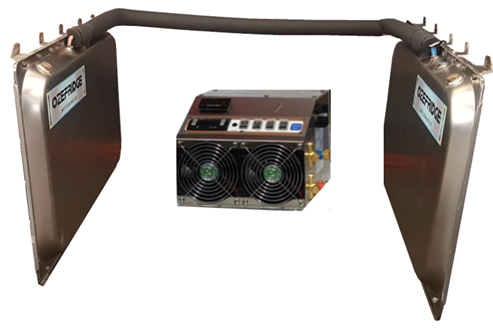
A single plate combo system is a straightforward, space-efficient choice when your box capacity fits within the Cold Plate A, B, or C ranges. If your setup requires broader coverage or a more demanding configuration, our dual cold plate system gives you a step up in capacity planning, and we can review your box details to determine the best match before you purchase.
Panel Read Out Settings For Celsius and Fahrenheit
Single Plate Combo Systems
COLD PLATE – A=Small
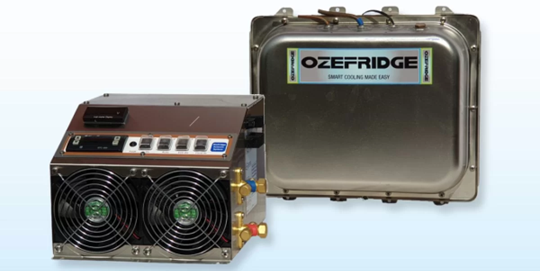
Cold Plate A-Small and Compressor Combo:
Good for boxes up to 3.5 cu/ft. Extremely low power consumption using as low as 8 to 12 ah per day.
This is the Smallest dimension cold plate option measuring: Cold Plate A: 11.82″ x 11.42″x 2.40″
COLD PLATE – B=Medium
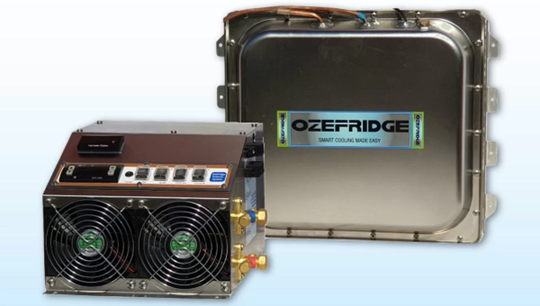
Cold Plate B-Medium and Compressor Combo:
Good for boxes up to 5.3 cu/ft and freezers to 3.0 cu/ft utilizing a double cold plate configuration.
Extremely low power consumption using as low as 10 to 16 ah per day.
This is the mid-sized cold plate option measuring: Cold Plate B- Medium: 15.75″ x 13″ x 2.40″
COLD PLATE – C=Large
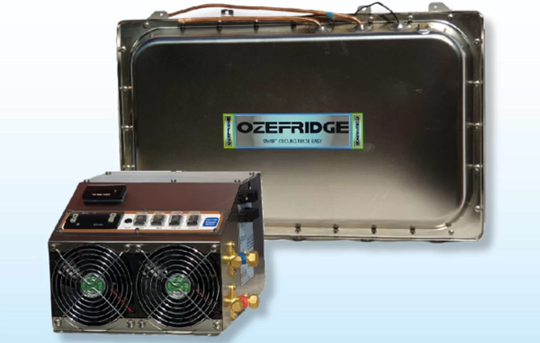
Cold Plate C-Large and Compressor Combo
Good for boxes up to 6.4 cu/ft and freezers to 7.0 cu/ft utilizing a double cold plate configuration.
Extremely low power consumption using as low as 48 to 57 ah per day.
This is the largest cold plate measuring: Cold Plate C-Large: 21″ x 14″ x 2.40″
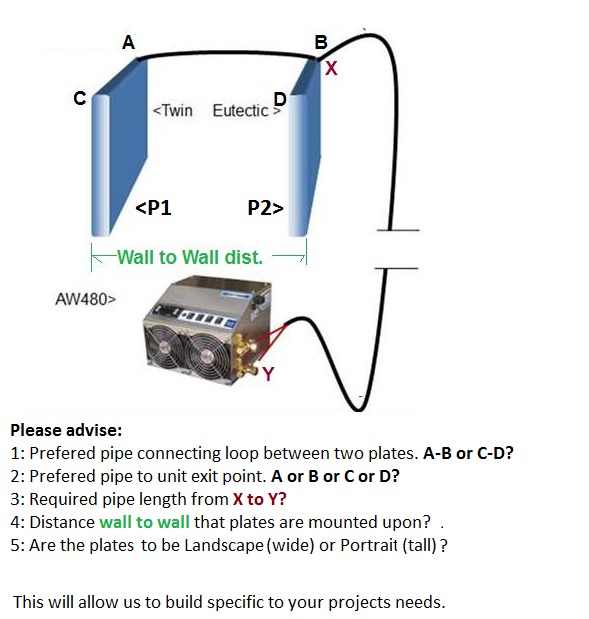
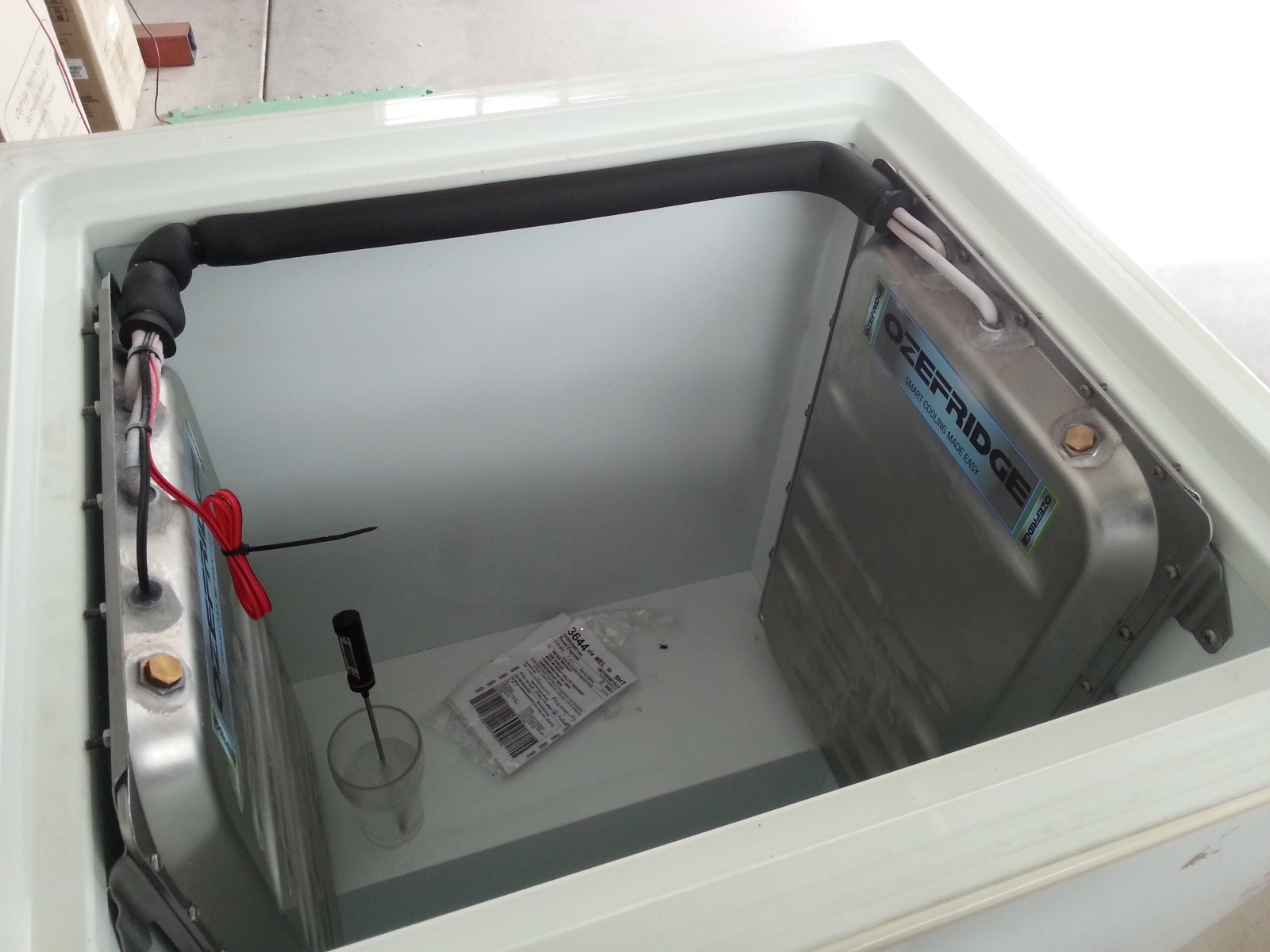
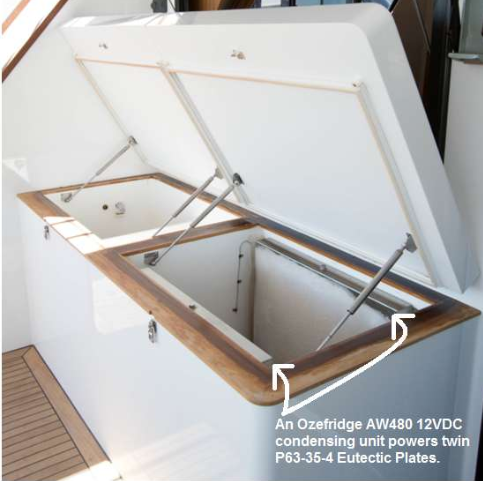
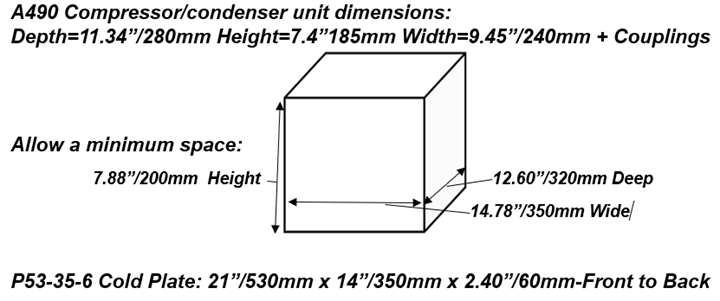
.
Marine Compressor Condenser Temperature Control
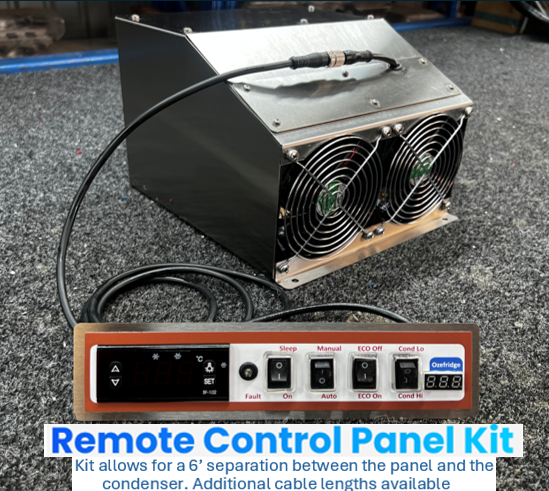
Our OzeFridge systems manage condenser temperatures automatically to reduce performance swings in hot compartments or cooler ambient conditions, helping the system stay efficient and consistent underway. In most installations, air cooling handles heat rejection effectively, and you can monitor condenser temperature directly from the controller for added confidence while cruising.
- Automatic temperature regulation for steadier operation
- Built to handle changing onboard conditions
- Controller-based condenser temperature monitoring
- Reliable air-cooled performance in common installs
Automatic Fan Staging for Optimal Performance
The condenser cooling strategy stages fan operation as temperature demands change—bringing additional airflow online only when required—so the system runs efficiently without unnecessary draw.
Optional Cooling Fans for Enclosed Installations
For lockers and other tight spaces, we provide terminals for an extra 12V fan to increase ventilation around the condensing unit and improve performance when airflow is restricted.
Marine Refrigeration Compressor Performance in Hot Environments
High ambient temperatures can push condensing pressures up and reduce efficiency, which is why we recommend pairing smart temperature control with the right cooling strategy for your install.
Compressor Pressure Reduction with Fresh Water Cooling
In hotter conditions, fresh water cooling can lower high-side pressure and reduce compressor workload, supporting steadier operation when the environment would otherwise force the system to run harder.
Energy Savings in Tropical and Enclosed Spaces
When your unit is installed in an enclosed area or you cruise in tropical heat, improved heat rejection can translate into measurable daily savings—helping your boat refrigerator compressor maintain performance while protecting your battery capacity.
Marine Compressor Technical Resources & System Details
We make it easy to plan your install with clear, practical resources so you can confirm fitment, dimensions, and system requirements before ordering.
Download Marine Refrigeration Compressor Specifications
Use our printable tear sheet to gather the specs we need and review system details—then we’ll help you confirm the best configuration based on your box and installation constraints.

+/- Understanding Ozefridge Fresh Water Cooling – Option Explained:
Fresh Water Cooling Option:
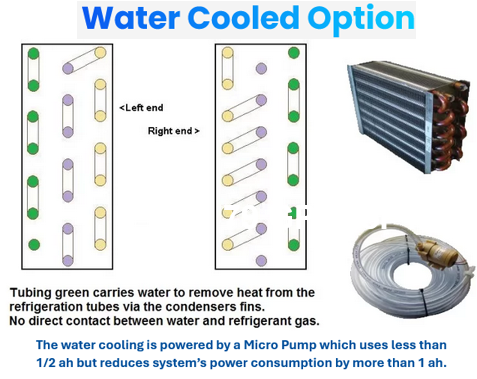
OzeFridge approaches the use of water cooling of the refrigerant gas condenser differently than other systems on the market, which contributes to the industry leading technical design and efficiency. First, it’s important to note that the water cooling on OzeFridge units is done by Fresh Water from your ships water tank rather than dealing with the corrosive nature of sea water! Right away, the No 1 maintenance issue with a water cooled refrigerant condenser goes away, and that is fouling and scaling of the raw water heat exchanger.
Using the ships fresh water tank for condenser cooling raises two common questions:
1) Will it make my tank water hot?
2) Is there a risk of contaminating my tank water?
1- To address warming your tank water, the BTUs of heat being transferred to your tank water are minimal and in tanks over 10Gallons, you won’t even notice a warming of the fresh water.
2- In terms of the risk of Fresh Water Contamination, the configuration of the fresh water cooling loop on the condenser eliminates the risk of Refrigerant Gas to Water contamination. The Water Loop on the condenser is also high quality and food safe.
A second important feature of the OzeFridge fresh water cooling feature is it’s control.
On systems equipped with Fresh Water Cooling, it only turns on when the Condensing unit reaches 110 degs F or higher.
So energy is not used when it’s not needed.
Concerning Energy, the ultra low amp draw micro-pump, only uses 0.5 Amp-Hours or power to the overall daily power usage, but that is off-set by the 1.0Amp-Hours of overall energy savings of the compressor. So adding the fresh water cooling option, can actually use Less Daily Power when the compressor unit is operating in Hot or Enclosed spaces without good dissipation of condenser heat.
Lastly and something to consider first, would be to understand why and when the Ozefridge system would benefit from adding fresh water cooling. Which is, when the compressor unit is going to be mounted in an enclosed space without the ability to have adequate exchange of the space air.
+/- Condenser Temperature Control – Additional Information:
The OzeFridge Compressor/Condensing units are designed to maintain a condensing temperature as close as possible to the optimum design specs to prevent both over-condensing in cold environments and more commonly, to prevent under-condensing in hotter environments. Properly controlling the Condenser temperature is a major factor in OzeFridge system’s industry leading efficiency. Something no other marine refrigeration system has, the condensing temperature on the OzeFridge Condenser can be easily checked by pressing the “up” button on the digital temperature controller.
The Condenser temperature is first controlled using air and for units operating in enclosed spaces or in the tropics, with optional Fresh Water cooling. Looking first at the air cooling control details, the OzeFridge is equipped with two cooling fans. The Compressor unit starts the Condenser cooling with one fan and then switches to twin fans as required based on Condenser temperature. When the Condenser temperature lowers sufficiently it will automatically revert back to one fan operation to maintain optimum condensing.
The Compressor/Condensing unit also comes equipped with power terminals set-up to run an additional 12v cooling fan. These power terminals are energized when the Compressor/Condenser unit is running. This comes in useful for installation that have the Compressor/Condensing unit mounted in a closed locker or space to help with air flow through the locker.
For most projects air only is adequate. Air and Fresh Water cooling is recommended for large refrigeration boxes, especially if the condensing unit is placed in an air-restricted, hot area or sailing in the tropics is planned. For systems with the optional Fresh Water cooling, the compressor unit starts the Condenser cooling with the single fan and when the temperature of the condenser reaches 43C (109F) bot the second cooling fan and the Fresh Water cooling pump are turn on. Once the Condenser temperature go below 43C (109F), the system automatically reverts to the single fan cooling.
In hot environments, Fresh Water cooling leads to a decrease in compressor high side pressures and lower the net overall power draw. For example, an air-only system operating in a 40C (104F) environment will see typical compressor high side pressures approaching 200psi. However, adding fresh water-cooling can lower the compressor high side pressures to about 155psi, for a 22.5% decrease. The lower high side compressor pressures, results in a decreased Amp usage for the same level of Refrigeration Box cooling.
FAQ SECTION
How Fresh Water Cooling Improves Compressor Efficiency
By keeping condensing temperatures under control, fresh water cooling reduces heat load on the marine refrigeration compressor, so it doesn’t have to work as hard to maintain target box temperatures—especially during warm-weather cruising.
Fresh Water Cooling vs Seawater Cooling
Unlike seawater-cooled setups that can struggle with scaling and fouling over time, our approach uses fresh tank water to help a refrigerator compressor shed heat more consistently, which supports long-term reliability on the water.
Is Fresh Water Cooling Safe for Boat Water Tanks?
Yes—our system is designed so the cooling loop is isolated and food-safe, and the cooling feature only activates when needed, making it a smart upgrade for a 12v marine fridge compressor installation without compromising onboard water quality.
All rights reserved Cruiser Services LLC 2026
